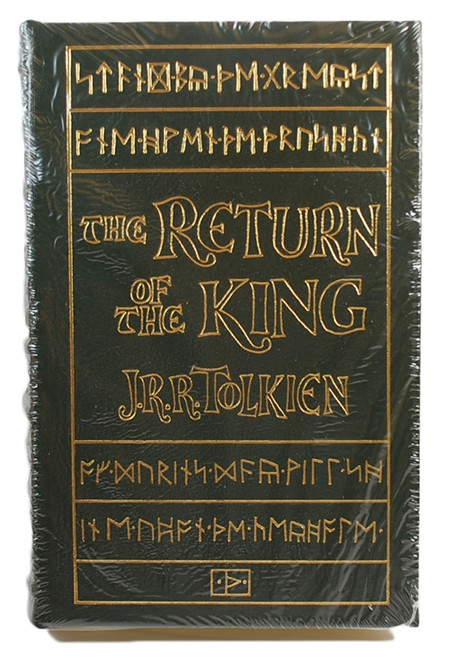
![J.R.R. Tolkien "The Lay Of Aotrou & Itroun" Leather-Bound Limited Edition [Sealed]](https://cdn11.bigcommerce.com/s-eohzfjch7f/images/stencil/500x659/products/3481/29728/1000x1250__96541.1770559723.jpg?c=1 "J.R.R. Tolkien \"The Lay Of Aotrou & Itroun\" Leather-Bound Limited Edition [Sealed]")
![J.R.R. Tolkien "The Lay Of Aotrou & Itroun" Leather-Bound Limited Edition [Sealed]](https://cdn11.bigcommerce.com/s-eohzfjch7f/images/stencil/1280x1280/products/3481/29728/1000x1250__96541.1770559723.jpg?c=1 "J.R.R. Tolkien \"The Lay Of Aotrou & Itroun\" Leather-Bound Limited Edition [Sealed]")
![J.R.R. Tolkien "The Lay Of Aotrou & Itroun" Leather-Bound Limited Edition [Sealed]](https://cdn11.bigcommerce.com/s-eohzfjch7f/images/stencil/50x50/products/3481/29728/1000x1250__96541.1770559723.jpg?c=1 "J.R.R. Tolkien \"The Lay Of Aotrou & Itroun\" Leather-Bound Limited Edition [Sealed]")
![J.R.R. Tolkien "The Lay Of Aotrou & Itroun" Leather-Bound Limited Edition [Sealed]](https://cdn11.bigcommerce.com/s-eohzfjch7f/images/stencil/50x50/products/3481/29767/Aoutrou-EP-Tolkien__59240.1770638039.jpg?c=1 "J.R.R. Tolkien \"The Lay Of Aotrou & Itroun\" Leather-Bound Limited Edition [Sealed]")
![J.R.R. Tolkien "The Lay Of Aotrou & Itroun" Leather-Bound Limited Edition [Sealed]](https://cdn11.bigcommerce.com/s-eohzfjch7f/images/stencil/50x50/products/3481/29724/IMG_0993_edited__03353.1770559431.jpg?c=1 "J.R.R. Tolkien \"The Lay Of Aotrou & Itroun\" Leather-Bound Limited Edition [Sealed]")
![J.R.R. Tolkien "The Lay Of Aotrou & Itroun" Leather-Bound Limited Edition [Sealed]](https://cdn11.bigcommerce.com/s-eohzfjch7f/images/stencil/50x50/products/3481/29727/IMG_0994_edited__23029.1770559431.jpg?c=1 "J.R.R. Tolkien \"The Lay Of Aotrou & Itroun\" Leather-Bound Limited Edition [Sealed]")
![J.R.R. Tolkien "The Lay Of Aotrou & Itroun" Leather-Bound Limited Edition [Sealed]](https://cdn11.bigcommerce.com/s-eohzfjch7f/images/stencil/50x50/products/3481/29722/IMG_0995_edited__89731.1770559431.jpg?c=1 "J.R.R. Tolkien \"The Lay Of Aotrou & Itroun\" Leather-Bound Limited Edition [Sealed]")
![J.R.R. Tolkien "The Lay Of Aotrou & Itroun" Leather-Bound Limited Edition [Sealed]](https://cdn11.bigcommerce.com/s-eohzfjch7f/images/stencil/50x50/products/3481/29725/IMG_0996_edited__97048.1770559431.jpg?c=1 "J.R.R. Tolkien \"The Lay Of Aotrou & Itroun\" Leather-Bound Limited Edition [Sealed]")
![J.R.R. Tolkien "The Lay Of Aotrou & Itroun" Leather-Bound Limited Edition [Sealed]](https://cdn11.bigcommerce.com/s-eohzfjch7f/images/stencil/1280x1280/products/3481/29728/1000x1250__96541.1770559723.jpg "J.R.R. Tolkien \"The Lay Of Aotrou & Itroun\" Leather-Bound Limited Edition [Sealed]")
![J.R.R. Tolkien "The Lay Of Aotrou & Itroun" Leather-Bound Limited Edition [Sealed]](https://cdn11.bigcommerce.com/s-eohzfjch7f/images/stencil/1280x1280/products/3481/29767/Aoutrou-EP-Tolkien__59240.1770638039.jpg "J.R.R. Tolkien \"The Lay Of Aotrou & Itroun\" Leather-Bound Limited Edition [Sealed]")
![J.R.R. Tolkien "The Lay Of Aotrou & Itroun" Leather-Bound Limited Edition [Sealed]](https://cdn11.bigcommerce.com/s-eohzfjch7f/images/stencil/1280x1280/products/3481/29724/IMG_0993_edited__03353.1770559431.jpg "J.R.R. Tolkien \"The Lay Of Aotrou & Itroun\" Leather-Bound Limited Edition [Sealed]")
![J.R.R. Tolkien "The Lay Of Aotrou & Itroun" Leather-Bound Limited Edition [Sealed]](https://cdn11.bigcommerce.com/s-eohzfjch7f/images/stencil/1280x1280/products/3481/29727/IMG_0994_edited__23029.1770559431.jpg "J.R.R. Tolkien \"The Lay Of Aotrou & Itroun\" Leather-Bound Limited Edition [Sealed]")
![J.R.R. Tolkien "The Lay Of Aotrou & Itroun" Leather-Bound Limited Edition [Sealed]](https://cdn11.bigcommerce.com/s-eohzfjch7f/images/stencil/1280x1280/products/3481/29722/IMG_0995_edited__89731.1770559431.jpg "J.R.R. Tolkien \"The Lay Of Aotrou & Itroun\" Leather-Bound Limited Edition [Sealed]")
![J.R.R. Tolkien "The Lay Of Aotrou & Itroun" Leather-Bound Limited Edition [Sealed]](https://cdn11.bigcommerce.com/s-eohzfjch7f/images/stencil/1280x1280/products/3481/29725/IMG_0996_edited__97048.1770559431.jpg "J.R.R. Tolkien \"The Lay Of Aotrou & Itroun\" Leather-Bound Limited Edition [Sealed]")
Coming from the darker side of J.R.R. Tolkien's imagination, "The Lay of Aotrou and Itroun" is an important non Middle-earth work to set alongside his other retellings of existing myth and legend.
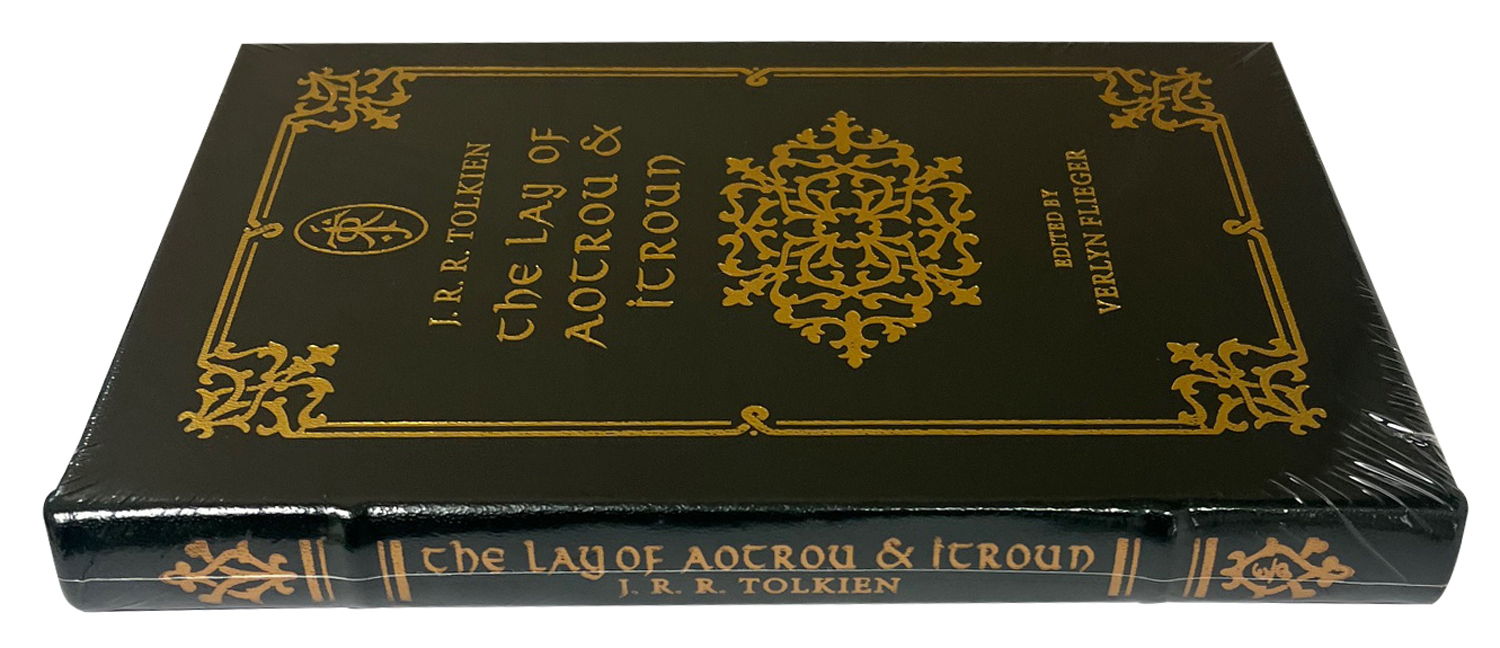
Easton Press, Norwalk, CT. J.R.R. Tolkien "The Lay Of Aotrou & Itroun". Leather-Bound Limited Edition. As New, sealed in the original shrink-wrap without any flaws. With its premium leather binding, a hubbed spine accented with true 22kt gold, and gilded page ends, this luxurious volume is the state-of-the-art in fine bookmaking.
- Edited by Verlyn Flieger
- Dimensions: 5 1/2" x 8 1/2"
- 128 pages
Out of print for more than 75 years…Set "In Britain’s land beyond the seas" during the Age of Chivalry, The Lay of Aotrou and Itroun, out of print for over 75 years, tells the dark tale of a childless Breton Lord and Lady and the tragedy that befalls them.
The Lay of Aotrou and Itroun is a poem of 508 lines, written by J. R. R. Tolkien in 1930 and published in Welsh Review in December 1945.
Aotrou and Itroun are Breton words for "lord" and "lady". The poem is modelled on the genre of the "Breton lay" popular in Middle English literature of the 12th century, and it explores the conflict of heroic or chivalric values and Christianity, and their relation to the institution of marriage.
J.R.R. Tolkien (1892–1973) was a distinguished academic, though he is best known for writing The Hobbit, The Lord of the Rings, and The Silmarillion, plus other stories and essays. His books have been translated into over sixty languages and have sold many millions of copies worldwide.
The Lay of Aotrou and Itroun
Coming from the darker side of J.R.R. Tolkien's imagination, "The Lay of Aotrou and Itroun" is an important non Middle-earth work to set alongside his other retellings of existing myth and legend, The Legend of Sigurd and Gudrún, The Fall of Arthur and The Story of Kullervo.
Unavailable for more than 70 years, this early but important work is published for the first time with Tolkien's 'Corrigan' poems and other supporting material, including a prefatory note by Christopher Tolkien.
Set 'In Britain's land beyond the seas' during the Age of Chivalry, The Lay of Aotrou and Itroun tells of a childless Breton Lord and Lady (the 'Aotrou' and 'Itroun' of the title) and the tragedy that befalls them when Aotrou seeks to remedy their situation with the aid of a magic potion obtained from a corrigan, or malevolent fairy. When the potion succeeds and Itroun bears twins, the corrigan returns seeking her fee, and Aotrou is forced to choose between betraying his marriage and losing his life.
Coming from the darker side of J.R.R. Tolkien's imagination, The Lay of Aotrou and Itroun, together with the two shorter 'Corrigan' poems that lead up to it and which are also included, was the outcome of a comparatively short but intense period in Tolkien's life when he was deeply engaged with Celtic, and particularly Breton, myth and legend.
Originally written in 1930 and long out of print, this early but seminal work is an important addition to the non-Middle-earth portion of his canon and should be set alongside Tolkien's other retellings of myth and legend, The Legend of Sigurd and Gudrún, The Fall of Arthur and The Story of Kullervo. Like these works, it belongs to a small but important corpus of his ventures into 'real-world' mythologies, each of which in its own way would be a formative influence on his own legendarium.
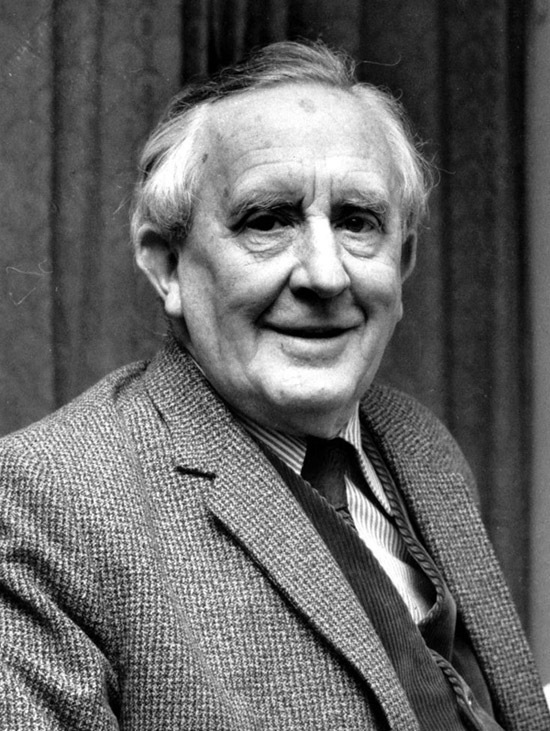
J.R.R. Tolkien
John Ronald Reuel Tolkien (3 January 1892 – 2 September 1973) was an English writer and philologist. He was the author of the high fantasy works The Hobbit and The Lord of the Rings.
From 1925 to 1945, Tolkien was the Rawlinson and Bosworth Professor of Anglo-Saxon and a Fellow of Pembroke College, both at the University of Oxford. He then moved within the same university to become the Merton Professor of English Language and Literature and Fellow of Merton College, and held these positions from 1945 until his retirement in 1959. Tolkien was a close friend of C. S. Lewis, a co-member of the informal literary discussion group The Inklings. He was appointed a Commander of the Order of the British Empire by Queen Elizabeth II on 28 March 1972.
After Tolkien's death, his son Christopher published a series of works based on his father's extensive notes and unpublished manuscripts, including The Silmarillion. These, together with The Hobbit and The Lord of the Rings, form a connected body of tales, poems, fictional histories, invented languages, and literary essays about a fantasy world called Arda and, within it, Middle-earth. Between 1951 and 1955, Tolkien applied the term legendarium to the larger part of these writings.
While many other authors had published works of fantasy before Tolkien, the tremendous success of The Hobbit and The Lord of the Rings ignited a profound interest in the fantasy genre and ultimately precipitated an avalanche of new fantasy books and authors. As a result, he has been popularly identified as the "father" of modern fantasy literature and is widely regarded as one of the most influential authors of all time.
Features
Includes all the classic Easton Press qualities:* Premium Leather
* Silk Moire Endleaves
* Distinctive Cover Design
* Hubbed Spine, Accented in Real 22KT Gold
* Satin Ribbon Page Marker
* Gilded Page Edges
* Long-lasting, High Quality Acid-neutral Paper
* Smyth-sewn Pages for Strength and Durability
* Beautiful Illustrations
- Publisher:
- Easton Press
- Edition:
- Limited Edition
- Binding:
- Leather Bound
- Author:
- J.R.R. Tolkien
- Title:
- The Lay Of Aotrou & Itroun
- Editor:
- Verlyn Flieger
![J.R.R. Tolkien "The Lays Of Beleriand" Leather-Bound Limited Edition [Sealed]](https://cdn11.bigcommerce.com/s-eohzfjch7f/images/stencil/500x659/products/3459/29179/1000x1250__68442.1767534236.jpg?c=1 "J.R.R. Tolkien \"The Lays Of Beleriand\" Leather-Bound Limited Edition [Sealed]")
![J.R.R. Tolkien "The Story of Kullervo" Limited Edition, Leather Bound Collector's Edition [Sealed]](https://cdn11.bigcommerce.com/s-eohzfjch7f/images/stencil/500x659/products/2931/12497/1280x1280__33015.1652789951.jpg?c=1 "J.R.R. Tolkien \"The Story of Kullervo\" Limited Edition, Leather Bound Collector's Edition [Sealed]")
![J.R.R. Tolkien "Tales From The Perilous Realm" Leather-Bound Limited Edition [Sealed]](https://cdn11.bigcommerce.com/s-eohzfjch7f/images/stencil/500x659/products/3464/29254/1000x1250__71939.1767782005.jpg?c=1 "J.R.R. Tolkien \"Tales From The Perilous Realm\" Leather-Bound Limited Edition [Sealed]")

![Easton Press, J.R.R. Tolkien "The Fellowship Of The Ring" Leather Bound Collector's Edition [Sealed]](https://cdn11.bigcommerce.com/s-eohzfjch7f/images/stencil/500x659/products/328/1500/215-105-2__27449.1601670215.jpg?c=1 "Easton Press, J.R.R. Tolkien \"The Fellowship Of The Ring\" Leather Bound Collector's Edition [Sealed]")