![Charles Mackay "Memoirs of Extraordinary Popular Delusions" Slipcased Deluxe Limited Edition of 800 [Sealed]](https://cdn11.bigcommerce.com/s-eohzfjch7f/images/stencil/500x659/products/3447/28727/1000x1250__64367.1763915092.jpg?c=1 "Charles Mackay \"Memoirs of Extraordinary Popular Delusions\" Slipcased Deluxe Limited Edition of 800 [Sealed]")
![Charles Mackay "Memoirs of Extraordinary Popular Delusions" Slipcased Deluxe Limited Edition of 800 [Sealed]](https://cdn11.bigcommerce.com/s-eohzfjch7f/images/stencil/1280x1280/products/3447/28727/1000x1250__64367.1763915092.jpg?c=1 "Charles Mackay \"Memoirs of Extraordinary Popular Delusions\" Slipcased Deluxe Limited Edition of 800 [Sealed]")
![Charles Mackay "Memoirs of Extraordinary Popular Delusions" Slipcased Deluxe Limited Edition of 800 [Sealed]](https://cdn11.bigcommerce.com/s-eohzfjch7f/images/stencil/50x50/products/3447/28727/1000x1250__64367.1763915092.jpg?c=1 "Charles Mackay \"Memoirs of Extraordinary Popular Delusions\" Slipcased Deluxe Limited Edition of 800 [Sealed]")
![Charles Mackay "Memoirs of Extraordinary Popular Delusions" Slipcased Deluxe Limited Edition of 800 [Sealed]](https://cdn11.bigcommerce.com/s-eohzfjch7f/images/stencil/50x50/products/3447/28730/IMG_9880_edited__91692.1763915092.jpg?c=1 "Charles Mackay \"Memoirs of Extraordinary Popular Delusions\" Slipcased Deluxe Limited Edition of 800 [Sealed]")
![Charles Mackay "Memoirs of Extraordinary Popular Delusions" Slipcased Deluxe Limited Edition of 800 [Sealed]](https://cdn11.bigcommerce.com/s-eohzfjch7f/images/stencil/50x50/products/3447/28726/IMG_9881_edited__51870.1763915092.jpg?c=1 "Charles Mackay \"Memoirs of Extraordinary Popular Delusions\" Slipcased Deluxe Limited Edition of 800 [Sealed]")
![Charles Mackay "Memoirs of Extraordinary Popular Delusions" Slipcased Deluxe Limited Edition of 800 [Sealed]](https://cdn11.bigcommerce.com/s-eohzfjch7f/images/stencil/50x50/products/3447/28731/IMG_9882_edited__55773.1763915092.jpg?c=1 "Charles Mackay \"Memoirs of Extraordinary Popular Delusions\" Slipcased Deluxe Limited Edition of 800 [Sealed]")
![Charles Mackay "Memoirs of Extraordinary Popular Delusions" Slipcased Deluxe Limited Edition of 800 [Sealed]](https://cdn11.bigcommerce.com/s-eohzfjch7f/images/stencil/50x50/products/3447/28729/IMG_9883_edited__41740.1763915092.jpg?c=1 "Charles Mackay \"Memoirs of Extraordinary Popular Delusions\" Slipcased Deluxe Limited Edition of 800 [Sealed]")
![Charles Mackay "Memoirs of Extraordinary Popular Delusions" Slipcased Deluxe Limited Edition of 800 [Sealed]](https://cdn11.bigcommerce.com/s-eohzfjch7f/images/stencil/50x50/products/3447/28725/IMG_9884_edited__29782.1763915092.jpg?c=1 "Charles Mackay \"Memoirs of Extraordinary Popular Delusions\" Slipcased Deluxe Limited Edition of 800 [Sealed]")
![Charles Mackay "Memoirs of Extraordinary Popular Delusions" Slipcased Deluxe Limited Edition of 800 [Sealed]](https://cdn11.bigcommerce.com/s-eohzfjch7f/images/stencil/50x50/products/3447/28728/IMG_9885_edited__84485.1763915092.jpg?c=1 "Charles Mackay \"Memoirs of Extraordinary Popular Delusions\" Slipcased Deluxe Limited Edition of 800 [Sealed]")
![Charles Mackay "Memoirs of Extraordinary Popular Delusions" Slipcased Deluxe Limited Edition of 800 [Sealed]](https://cdn11.bigcommerce.com/s-eohzfjch7f/images/stencil/1280x1280/products/3447/28727/1000x1250__64367.1763915092.jpg "Charles Mackay \"Memoirs of Extraordinary Popular Delusions\" Slipcased Deluxe Limited Edition of 800 [Sealed]")
![Charles Mackay "Memoirs of Extraordinary Popular Delusions" Slipcased Deluxe Limited Edition of 800 [Sealed]](https://cdn11.bigcommerce.com/s-eohzfjch7f/images/stencil/1280x1280/products/3447/28730/IMG_9880_edited__91692.1763915092.jpg "Charles Mackay \"Memoirs of Extraordinary Popular Delusions\" Slipcased Deluxe Limited Edition of 800 [Sealed]")
![Charles Mackay "Memoirs of Extraordinary Popular Delusions" Slipcased Deluxe Limited Edition of 800 [Sealed]](https://cdn11.bigcommerce.com/s-eohzfjch7f/images/stencil/1280x1280/products/3447/28726/IMG_9881_edited__51870.1763915092.jpg "Charles Mackay \"Memoirs of Extraordinary Popular Delusions\" Slipcased Deluxe Limited Edition of 800 [Sealed]")
![Charles Mackay "Memoirs of Extraordinary Popular Delusions" Slipcased Deluxe Limited Edition of 800 [Sealed]](https://cdn11.bigcommerce.com/s-eohzfjch7f/images/stencil/1280x1280/products/3447/28731/IMG_9882_edited__55773.1763915092.jpg "Charles Mackay \"Memoirs of Extraordinary Popular Delusions\" Slipcased Deluxe Limited Edition of 800 [Sealed]")
![Charles Mackay "Memoirs of Extraordinary Popular Delusions" Slipcased Deluxe Limited Edition of 800 [Sealed]](https://cdn11.bigcommerce.com/s-eohzfjch7f/images/stencil/1280x1280/products/3447/28729/IMG_9883_edited__41740.1763915092.jpg "Charles Mackay \"Memoirs of Extraordinary Popular Delusions\" Slipcased Deluxe Limited Edition of 800 [Sealed]")
![Charles Mackay "Memoirs of Extraordinary Popular Delusions" Slipcased Deluxe Limited Edition of 800 [Sealed]](https://cdn11.bigcommerce.com/s-eohzfjch7f/images/stencil/1280x1280/products/3447/28725/IMG_9884_edited__29782.1763915092.jpg "Charles Mackay \"Memoirs of Extraordinary Popular Delusions\" Slipcased Deluxe Limited Edition of 800 [Sealed]")
![Charles Mackay "Memoirs of Extraordinary Popular Delusions" Slipcased Deluxe Limited Edition of 800 [Sealed]](https://cdn11.bigcommerce.com/s-eohzfjch7f/images/stencil/1280x1280/products/3447/28728/IMG_9885_edited__84485.1763915092.jpg "Charles Mackay \"Memoirs of Extraordinary Popular Delusions\" Slipcased Deluxe Limited Edition of 800 [Sealed]")
"Men, it has been well said, think in herds; it will be seen that they go mad in herds, while they only recover their senses slowly, and one by one."
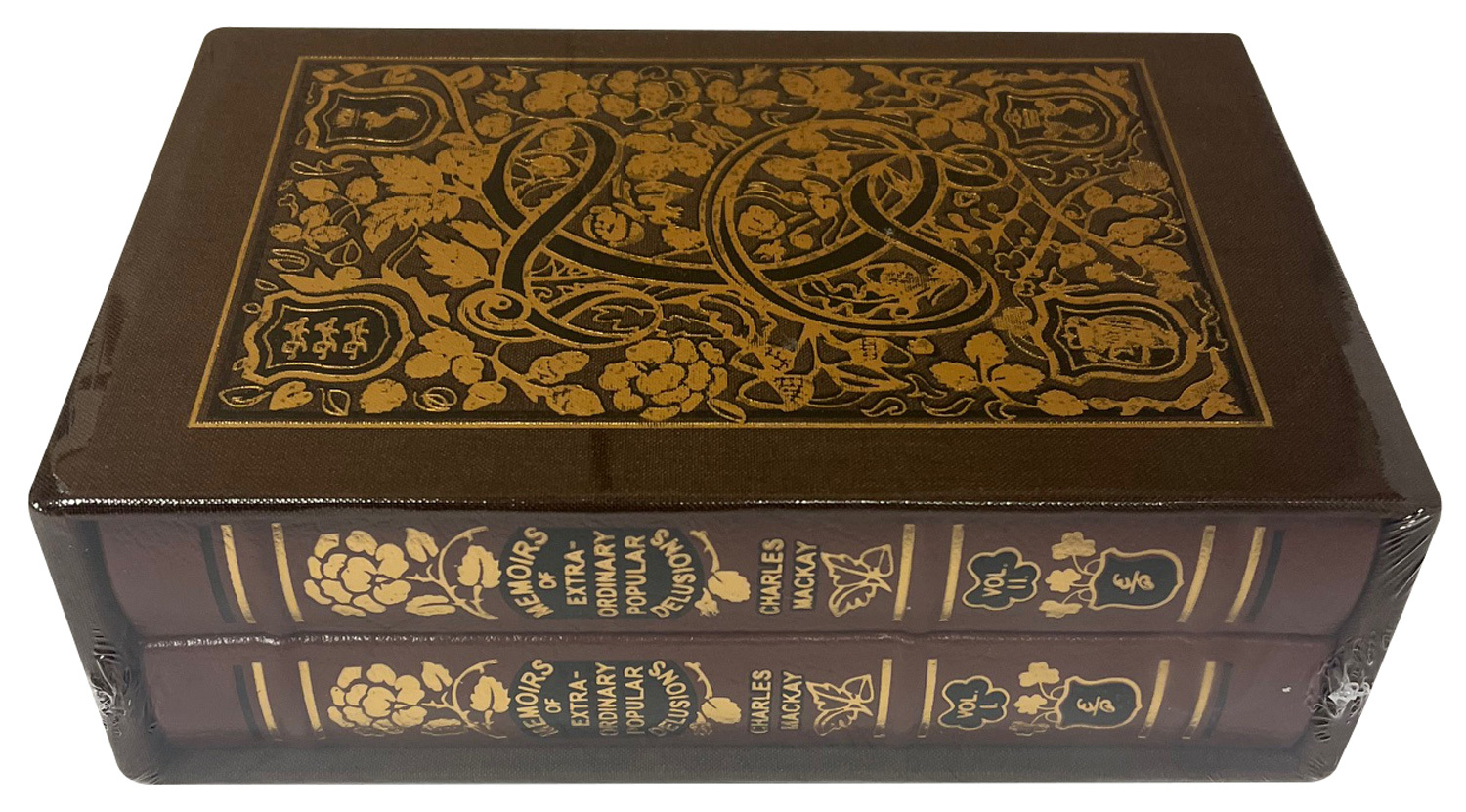
Easton Press. Charles Mackay "Memoirs of Extraordinary Popular Delusions and the Madness of Crowds". Slipcased 2-volume Limited Edition of 800 hand numbered copies. Luxuriously bound with full genuine leather. Sealed without any flaws. Recreation of the landmark 1852 edition. Dimensions: 7 1/4" x 5”.
Features all the vintage illustrations of that edition.
"Men, it has been well said, think in herds; it will be seen that they go mad in herds, while they only recover their senses slowly, and one by one."
A statement more true than ever in our modern times of internet and 24 hr news outlets! The landmark work on historic crazes and mob mentality, addressing such fascinating issues as alchemy, witchcraft, and the calamitous Dutch tulip mania of 1637. Mackay's masterpiece has had a profound influence on economics, market theory, and social psychology.
This is the classic work about grand-scale madness, major schemes, and bamboozlement--and the universal human susceptibility to all three. This informative, funny collection encompasses a broad range of manias and deceptions, from witch burnings to the Great Crusades to the prophecies of Nostradamus.
Extraordinary Popular Delusions and the Madness of Crowds
Extraordinary Popular Delusions and the Madness of Crowds is an early study of crowd psychology by Scottish journalist Charles Mackay, first published in 1841 under the title Memoirs of Extraordinary Popular Delusions. The book was published in three volumes: "National Delusions", "Peculiar Follies", and "Philosophical Delusions". A second edition appeared in 1852, reorganizing the three volumes into two and adding numerous engravings.[3] Mackay was an accomplished teller of stories, though he wrote in a journalistic and somewhat sensational style.
The subjects of Mackay's debunking include alchemy, crusades, duels, economic bubbles, fortune-telling, haunted houses, the Drummer of Tedworth, the influence of politics and religion on the shapes of beards and hair, magnetisers (influence of imagination in curing disease), murder through poisoning, prophecies, popular admiration of great thieves, popular follies of great cities, and relics. Present-day writers on economics, such as Michael Lewis and Andrew Tobias, laud the three chapters on economic bubbles.
In later editions, Mackay added a footnote referencing the Railway Mania of the 1840s as another "popular delusion" which was at least as important as the South Sea Bubble. In the 21st century, the mathematician Andrew Odlyzko pointed out, in a published lecture, that Mackay himself played a role in this economic bubble; as a leader writer in The Glasgow Argus, Mackay wrote on 2 October 1845: "There is no reason whatever to fear a crash".
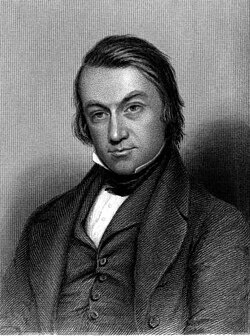
Charles Mackay
Charles Mackay (27 March 1814 – 24 December 1889) was a Scottish poet, journalist, author, anthologist, novelist, and songwriter, remembered mainly for his book Extraordinary Popular Delusions and the Madness of Crowds.
Features
- Fully bound in genuine leather.
- 22kt gold deeply inlaid on the "hubbed" spine.
- Superbly printed on acid-neutral paper that lasts for generations.
- Sewn pages - not just glued like ordinary books.
- Printed end-pages and a satin-ribbon page marker.
- Printed and bound in the USA. Imported materials.
- Rigorous inspection at every stage ensures adherence to exacting standards.
- Superb craftsmanship and commitment to quality.
- Beautiful Illustrations
- Gilded Page Edges
- Publisher:
- Easton Press
- Edition:
- Deluxe Limited Edition
- Binding:
- Full Genuine Leather
- Title:
- Memoirs of Extraordinary Popular Delusions and the Madness of Crowds
- Author:
- Charles Mackay
- Limitation:
- 800
![Ayn Rand "Atlas Shrugged" Deluxe Limited Edition of only 800 Slipcased [Sealed]](https://cdn11.bigcommerce.com/s-eohzfjch7f/images/stencil/500x659/products/269/23000/Ayn_Rand_Atlas-23__67034.1728002045.jpg?c=1 "Ayn Rand \"Atlas Shrugged\" Deluxe Limited Edition of only 800 Slipcased [Sealed]")
!["Grimm's Fairy Tales" Slipcased Deluxe Artist Limited Edition, Leather Bound Collector's Edition of 800 [Sealed]](https://cdn11.bigcommerce.com/s-eohzfjch7f/images/stencil/500x659/products/3155/18628/IMG_7444_edited__61893.1698239246.jpg?c=1 "\"Grimm's Fairy Tales\" Slipcased Deluxe Artist Limited Edition, Leather Bound Collector's Edition of 800 [Sealed]")
![Stephen King "Insomnia" Limited Gift Edition, Slipcased Edition [Sealed]](https://cdn11.bigcommerce.com/s-eohzfjch7f/images/stencil/500x659/products/958/3860/76-188-2__44861.1601670865.jpg?c=1 "Stephen King \"Insomnia\" Limited Gift Edition, Slipcased Edition [Sealed]")

![Tom Brady "The TB12 Method" Signed Limited Deluxe Edition, Slipcased [Sealed]](https://cdn11.bigcommerce.com/s-eohzfjch7f/images/stencil/500x659/products/1190/8200/The-TB12-Method-8__63892.1606395162.jpg?c=1 "Tom Brady \"The TB12 Method\" Signed Limited Deluxe Edition, Slipcased [Sealed]")